
The Complete Guide to Closed Terrariums: How They Work and Why They Thrive
There is something genuinely magical about watching a tiny ecosystem sustain itself inside a glass vessel with the lid on. As a terrarium artist and the maker behind Blue Squid Creation, I have spent years perfecting the art of closed terrariums, and I still find the science behind them fascinating.
This guide covers everything you need to know about closed terrariums: how they work, which plants thrive inside them, how to care for one, and why they make such brilliant gifts. Whether you are thinking about buying a terrarium online or simply curious about these miniature worlds, you are in the right place.
What Is a Closed Terrarium?
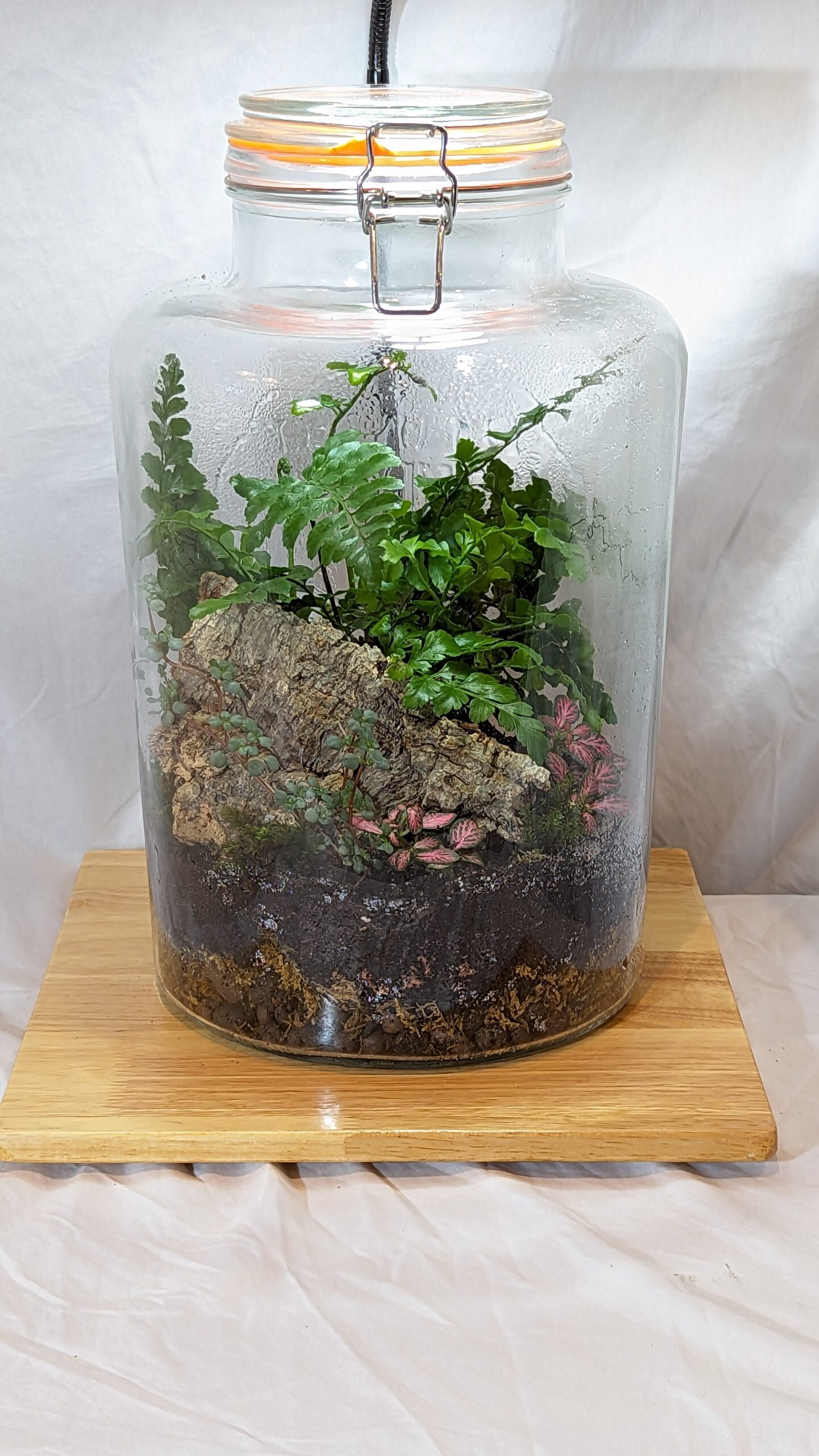
A closed terrarium is a closed glass container housing living plants that form a self-sustaining ecosystem. Unlike open terrariums (which suit succulents and cacti), closed terrariums create their own water cycle, meaning they need very little maintenance once established.
The concept dates back to the 1840s, when Dr Nathaniel Bagshaw Ward accidentally discovered that ferns could thrive inside closed glass cases. Those “Wardian cases” were the ancestors of every closed terrarium you see today.
How Do Closed Terrariums Work? The Science Explained
A closed terrarium is, in essence, a miniature version of the Earth’s water cycle contained within glass. Here is what happens inside:
- Transpiration: Plants release moisture through their leaves into the air inside the container.
- Evaporation: Water from the soil surface also evaporates, adding humidity.
- Condensation: The moisture hits the cooler glass walls and forms tiny droplets.
- Precipitation: Those droplets roll back down into the soil, watering the plants again.
- Photosynthesis and respiration: Plants produce oxygen during the day and carbon dioxide at night, creating a balanced gas exchange.
This self-sustaining cycle is why a well-made closed terrarium can thrive for months, even years, with almost no intervention. I have terrariums in my workshop here in Addlestone, Surrey, that have not been opened in over a year and are still lush and green.
The Best Plants for Closed Terrariums
Not every plant will thrive in a closed, humid environment. Through years of experimentation (and a fair few failures), I have narrowed down the species that perform brilliantly:
Top Picks for Closed Terrariums
- Fittonia (nerve plant): Vibrant pink, white, or green veined leaves. Loves humidity and stays compact.
- Ferns (maidenhair, button fern): Classic terrarium plants that adore moist conditions.
- Selaginella (spikemoss): Versatile plants; some varieties spread as ground cover, while others grow upright to add height and structure.
- Peperomia: Hardy, compact, and comes in gorgeous varieties.
- Polka dot plant (Hypoestes): Adds colour and character, though it may need occasional pruning.
- Moss varieties: Sheet moss and cushion moss (also known as mood moss) provide the “forest floor” look that makes terrariums so captivating.
Plants to Avoid
- Succulents and cacti: These need dry conditions and will rot in a closed, humid environment. If you love succulents, an open terrarium or dish garden is a better choice.
- Fast-growing plants: Anything that grows quickly will outpace its container and crowd out other plants.
- Plants that need full sun: Closed terrariums sit in bright, indirect light. Sun-loving plants will struggle.
What Goes Into a Closed Terrarium? Layers Explained
Every Blue Squid terrarium is built in carefully considered layers. Each one serves a purpose:
- Drainage layer (gravel or LECA): Prevents waterlogging by giving excess moisture somewhere to go.
- Activated charcoal: Filters the air and water, preventing bacterial growth and keeping things fresh.
- Substrate (terrarium-specific soil mix): A well-draining, nutrient-balanced mix that supports plant roots without becoming soggy.
- Plants: Carefully selected and positioned for growth patterns and aesthetics.
- Decorative elements: Moss, pebbles, bark, or miniature features that bring the scene to life.
Getting these layers right is the difference between a terrarium that thrives and one that develops mould within weeks.
Closed vs Open Terrariums: What Is the Difference?
| Feature | Closed Terrarium | Open Terrarium |
|---|---|---|
| Lid on? | Yes, fully enclosed | No, open top or sides |
| Humidity | High (self-cycling) | Low (ambient) |
| Best plants | Tropical, humidity-loving | Succulents, cacti, air plants |
| Watering | Rarely, if ever | Regular watering needed |
| Maintenance | Very low | Moderate |
| Ideal for | Gifts, low-effort greenery | People who enjoy active plant care |
How to Care for a Closed Terrarium
One of the best things about closed terrariums is how little they ask of you. Here is a quick care guide:
- Placement: Keep your terrarium in bright, indirect light. Never place it in direct sunlight, as the glass will magnify the heat and cook the plants inside.
- Watering: A healthy closed terrarium should show light condensation on the glass. If there is no condensation at all, add a tiny splash of water (a small amount depending on size). If the glass is completely fogged up, open the lid for a few hours to let excess moisture escape.
- Temperature: Room temperature is perfect. Avoid radiators, windowsills with direct sun, and draughty spots.
- Pruning: If plants start pressing against the glass, open the lid and trim them back gently.
- Observation: Check on your terrarium once a week. Look for yellowing leaves (remove them) or signs of mould (increase ventilation briefly).
For a deeper dive, see our full Terrarium Care 101 guide.
Why Buy a Handmade Terrarium?
You can find mass-produced terrariums online, but there is a real difference in quality. Every Blue Squid terrarium is handmade in my workshop in Addlestone, Surrey, using upcycled glass vessels and carefully sourced plants. I build each one to last, not to look good on a shelf for a fortnight before everything goes mouldy.
My background as a terrarium artist means I understand plant health, soil science, and the conditions each species needs. That knowledge goes into every terrarium I create.
Where to Buy Terrariums in the UK
If you are looking to buy a handmade terrarium in Surrey, Blue Squid Creation is based in Addlestone, Surrey. I offer free local delivery within 3 miles of KT15 and collection from my workshop. I ship carefully packaged terrariums across the country, and every one arrives with a care card so you know exactly how to keep it thriving.
Local to Addlestone, Weybridge, or the wider Surrey area? You can also arrange collection, which means you can see exactly what you are getting before you take it home.
Frequently Asked Questions
How long do closed terrariums last?
A well-made closed terrarium can last for years with minimal care. The key is getting the initial build right: correct drainage, appropriate plants, and the right amount of moisture. I have seen closed terrariums thrive for over a decade when properly set up.
Do closed terrariums need sunlight?
They need bright, indirect light, but never direct sunlight. Direct sun through the glass creates a greenhouse effect that will overheat and kill the plants. A spot near a north-facing window or a few feet back from a brighter window is ideal.
Can you put succulents in a closed terrarium?
No. Succulents need dry, well-ventilated conditions and will rot in the humid environment of a closed terrarium. If you love succulents, an open terrarium or dish garden is the way to go.
How often should I water a closed terrarium?
Rarely, if ever. A well-made closed terrarium recycles its own water. If you notice no condensation at all on the glass, add a small amount of water, depending on the size of the terrarium. Overwatering is the most common mistake people make.
Ready to Own a Closed Terrarium?
Whether you are searching for a terrarium near Addlestone, looking to buy a handmade terrarium in Surrey, or simply want something beautiful and low-maintenance for your home, Blue Squid Creation has you covered. Every terrarium is handmade in Surrey using upcycled glass and plants chosen by a terrarium artist. Browse the collection and order yours today.
Related Posts
Benefits of Terrariums in Your Home or Office
Ben Brooks
January 24, 2024
Watering Your Closed Terrarium
Ben Brooks
January 24, 2024