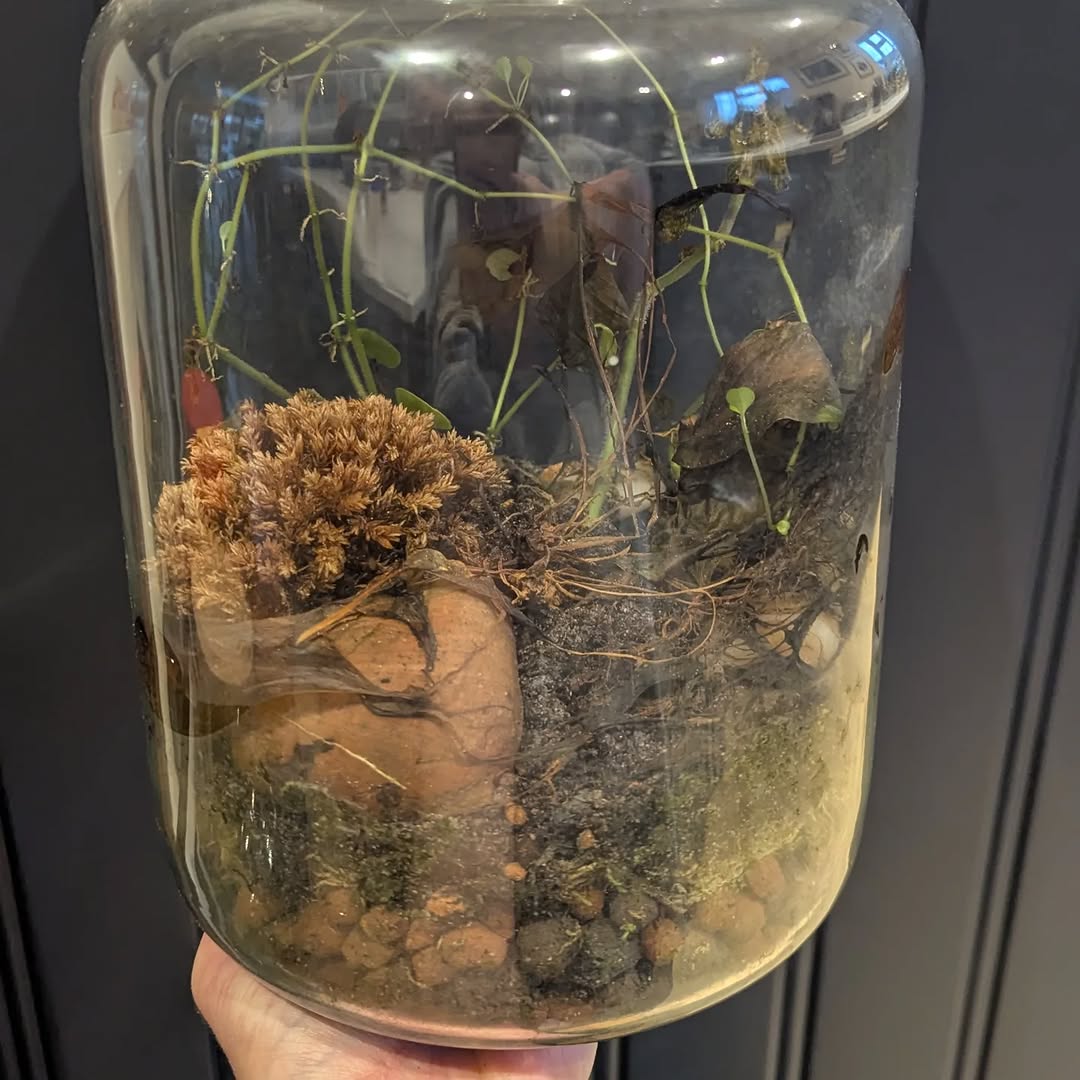
Every terrarium has a life cycle. The plants grow, shift, sometimes struggle. The moss fades. What started as a thriving little world on your windowsill can, over time, start looking a little more like an abandoned greenhouse than an indoor jungle. It happens to almost everyone who owns a terrarium, and it is nothing to worry about.
The good news is that the glass is usually still beautiful. And in most cases, the terrarium does not need replacing; it needs a remake.
Zoe Carlini is the Addlestone-based terrarium artist behind Blue Squid Creation. She remakes terrariums regularly for customers across Surrey, breathing new life into glass that still has plenty of character left in it. In this guide she explains what a full terrarium remake involves, and how to decide whether to tackle it yourself or hand it over.
What Happens During a Full Terrarium Remake
A terrarium remake is not a quick tidy. It means taking the terrarium back to bare glass and rebuilding it properly from the foundation up. Here is what the process looks like:
Step 1: Assess what can be saved
The first thing Zoe does is look at what, if anything, is worth keeping. Occasionally a plant is still thriving and can be carefully removed, cleaned, and replanted. The glass is almost always salvageable. Decorative stones or personal items can sometimes be cleaned and reused. Everything else, including the old soil, drainage layer, and struggling plants, comes out.
Step 2: Rebuild the foundation
A proper terrarium remake starts with a clean drainage layer at the base, followed by a layer of activated charcoal to keep the environment fresh, then a terrarium-specific soil mix suited to the plants going in. Getting this right is what determines how long the new planting will thrive. Generic houseplant compost is not the same as a terrarium-specific soil mix, and using the wrong substrate is one of the most common reasons terrariums struggle in the first place.
Step 3: Choose the right plants for the space
Zoe approaches every remake the same way she approaches a new build: she studies the glass first. Taller glass suits taller-growing plants that add height and structure. Lower, wider glass suits ground-hugging varieties and spreading mosses. The plant selection has to work with the shape, not against it.
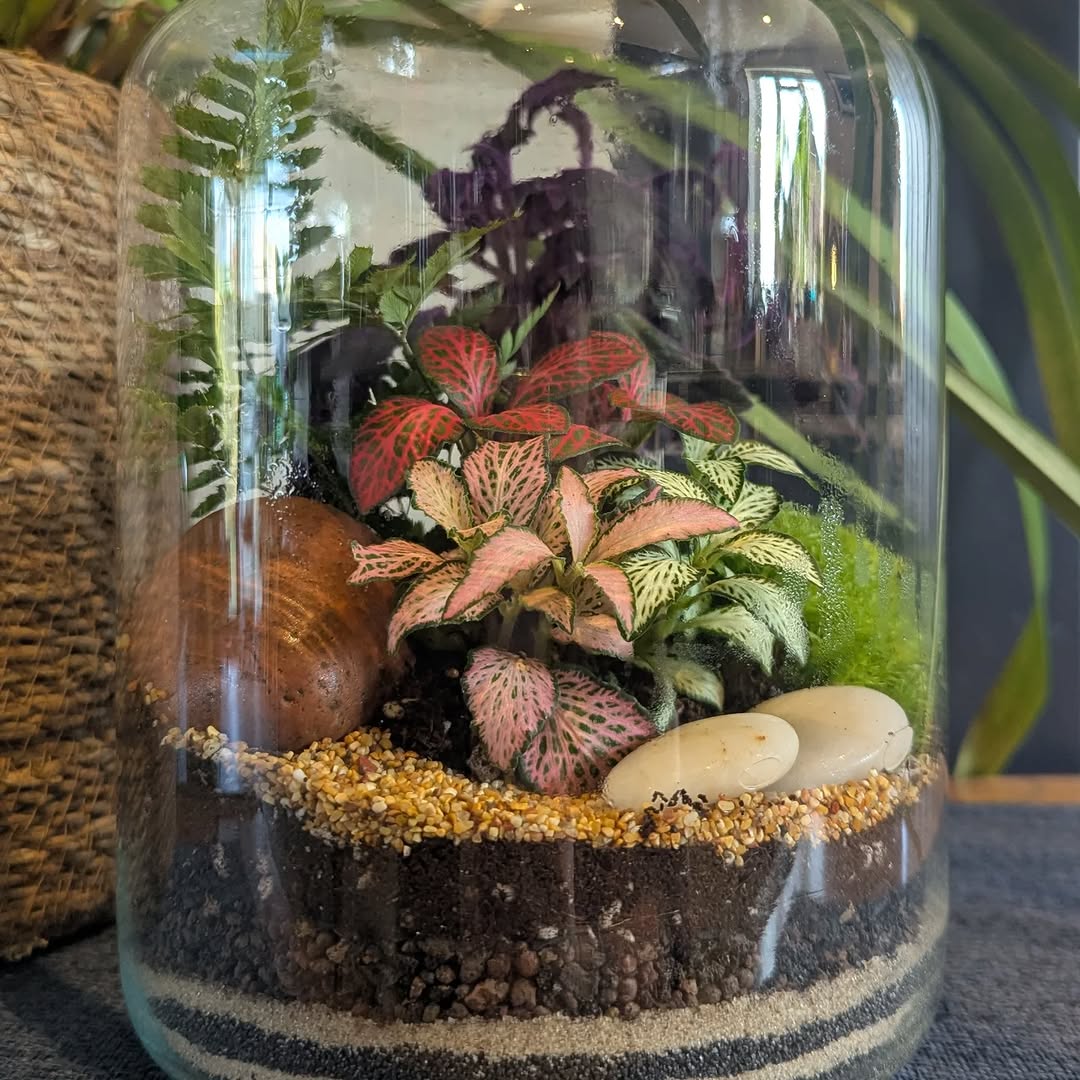
For closed terrariums she works with plants that thrive in humidity; fittonias, selaginella, and other moisture-loving varieties. For open terrariums being remade, she focuses on arid planting: succulents and air plants that prefer airflow.
Step 4: Bring it back to life
Fresh plants go in, cushion moss fills the gaps and softens the edges, and any finishing details are added. The result is a terrarium that looks new, built inside glass that already has its own history.
Can Any Glass Be Remade?
In almost all cases, yes. If the glass is intact it can be remade. This includes:
- Terrariums originally made by Zoe that have run their course
- Terrariums bought elsewhere that have struggled
- Vintage or upcycled glassware you already own that you would like turned into a terrarium
Zoe has remade everything from small lidded jars to larger vintage glass pieces. If you are not sure whether yours is suitable, send her a photo via the contact form and she will let you know.
The Most Common Reasons Terrariums Struggle
Understanding why a terrarium declined helps prevent the same thing from happening after a remake. The most common reasons are:
- Too much water. This is the most frequent issue, particularly with closed terrariums. A closed terrarium rarely needs watering because it recycles its own moisture. When it does need a top-up, a small amount is all that is needed; you can always add more, but you cannot take it away once it is in.
- Wrong light position. Terrariums need light. A bright room away from a window is usually ideal. Direct sun through glass can overheat the interior, and a north-facing windowsill may struggle in winter. The terrarium care guide covers light placement in detail.
- Wrong plants for the vessel type. Tropical plants belong in closed terrariums where they get the humidity they need. Succulents need open terrariums with good airflow. Mixing these up causes problems that no amount of care can fix.
- Unsuitable or compacted substrate. Over time, even good soil breaks down. A remake gives you the opportunity to start fresh with a properly layered, terrarium-specific foundation.
If you would like to understand more about caring for a terrarium before or after a remake, the complete guide to closed terrariums covers the basics in full.
DIY Remake vs. Asking Zoe to Do It
Some people enjoy the hands-on process of remaking a terrarium themselves. If you are comfortable working with plants, have access to a terrarium-specific soil mix, and enjoy the detail work, a DIY remake is a satisfying project. The steps above give you a solid framework to follow.
Others prefer to hand it over and get a professionally remade terrarium back. If the glass is particularly precious, the planting is complex, or you simply do not have the time, Zoe offers a terrarium remake service for customers across Surrey. Remakes start from £45, with the final price depending on the size of the terrarium and the plants chosen.
There is no wrong answer. The important thing is that the terrarium gets the fresh start it deserves, rather than being discarded.
Terrarium Remakes in Surrey and Addlestone
Blue Squid Creation is based in Addlestone, Surrey. Zoe offers drop-off and collection at her Addlestone address for customers who want a terrarium remake. For those within approximately 30 minutes’ drive, she also offers a collect and return service for an additional fee, so you do not need to make the trip yourself.
If you are based in Weybridge, Cobham, Virginia Water, Walton-on-Thames, Esher, Chertsey, Staines-upon-Thames, or the surrounding areas of Surrey, get in touch to discuss your remake via the contact form, or read more about the service on the terrarium remake service page.
You can also browse the shop if you are looking for a ready-made terrarium rather than a remake.
Looking After Your Terrarium After a Remake
A remade terrarium is essentially a new terrarium inside familiar glass. The care principles are the same as they would be for any new build, but there are a few things worth bearing in mind in the first few weeks.
For closed terrariums, give the new planting time to settle before worrying about watering. A closed terrarium recycles its own moisture, so the new substrate and plants will find their balance. A healthy amount of condensation on the glass is a good sign. If it becomes very heavy and persistent, try placing the glass somewhere with slightly less direct sun, or check it is not too close to a heat source like a radiator.
Light is the most important factor for any terrarium. A bright room away from the window tends to give the best results. Morning sun from an east-facing window works well. A north-facing windowsill is fine but can struggle in winter when the light drops. What you want to avoid is direct afternoon sun through glass, which concentrates heat and can overheat the interior.
For open terrariums with succulents, hold off on watering entirely through the colder months. In warmer months, water when the substrate feels dry, using a small cup of water rather than misting. Air plants in an open terrarium should be submerged in water for a few minutes in warmer months, then placed upside down until the leaves have dried out before going back in.
For a more detailed reference, Zoe’s terrarium care guide covers all the common questions, from what to do if leaves go yellow to how to deal with fungus gnats.
Frequently Asked Questions
How long does a terrarium remake take?
It depends on the size and complexity, but most remakes are turned around within a few days of drop-off. Zoe will give you a more accurate timescale when you get in touch.
Do I need to buy a new terrarium, or can Zoe remake mine?
Zoe can remake your existing terrarium. You do not need to buy a new one. The glass is almost always the part worth keeping.
What if all the plants in my terrarium have died?
That is fine. A completely empty terrarium is actually easier to work with than a partially struggling one. Zoe will remove everything down to the glass and rebuild from scratch.
Can Zoe remake a terrarium she did not originally make?
Yes. Zoe remakes terrariums regardless of where they originally came from, as long as the glass is suitable to work with. Send her a photo and she will let you know.
How much does a terrarium remake cost?
Remakes start from £45, with the final price depending on the size of the terrarium and the plants and materials chosen. Get in touch via the contact form for a quote.