
Terrarium Care 101: Everything You Need to Know
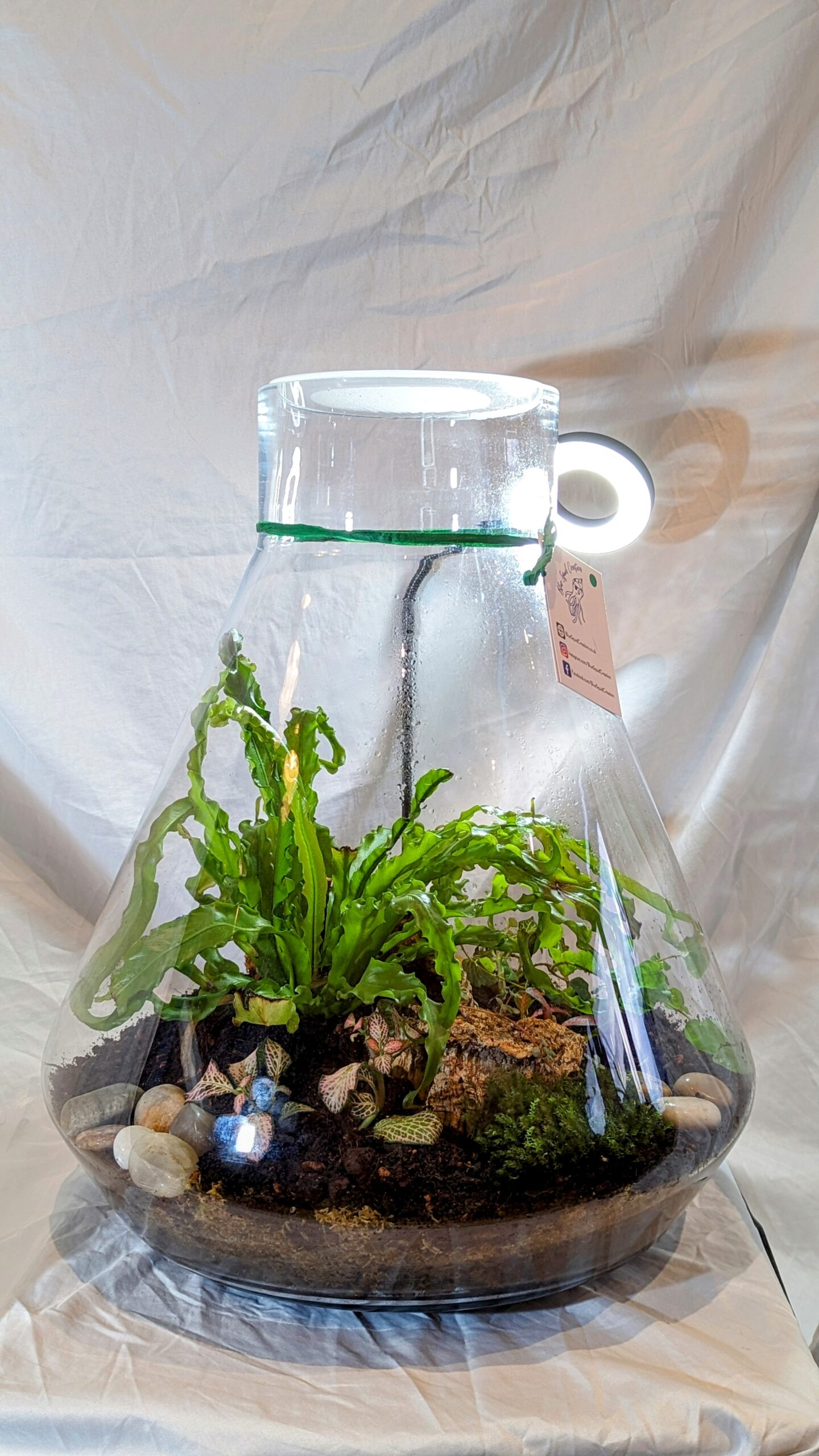
You have got a terrarium (or you are thinking of getting one), and you want to know how to keep it alive and thriving. Good news: terrariums are genuinely one of the easiest forms of indoor gardening. But “easy” does not mean “ignore it completely,” so here is everything you need to know about terrarium care, from a terrarium artist who builds them every day.
I am Zoe, the maker behind Blue Squid Creation in Addlestone, Surrey. I have been working with plants professionally for years, and terrariums are my absolute favourite thing to create and talk about. Let me walk you through keeping yours in perfect shape.
Closed Terrarium Care
If you have a closed (closed) terrarium, your main job is observation. The ecosystem does most of the work for you.
Light
Place your closed terrarium in bright, indirect light. A spot a metre or two from a window is usually ideal. Never put it in direct sunlight; the closed glass acts like a magnifying glass and will cook your plants. Equally, do not tuck it away in a dark corner, as the plants need light for photosynthesis.
Signs your terrarium needs more light: plants stretching or leaning towards the light source, pale or yellowing leaves, slow or no growth.
Signs it is getting too much light: scorched or brown leaf edges, excessive condensation, wilting despite adequate moisture.
Watering
This is where most people go wrong, usually by overwatering. a closed terrarium recycles its own water, so it should rarely need any added. Here is how to read the signs:
- Light condensation in the morning that clears by afternoon: Perfect. Leave it alone.
- No condensation at all: The terrarium is too dry. Open the lid and add a small amount of water, depending on the size of your terrarium. pop the lid back on and check again the next day.
- Heavy condensation that never clears (constant fog): Too much moisture. Open the lid for two to four hours to let excess humidity escape, then pop the lid back on.
- Water pooling at the bottom: Significantly overwatered. Leave the lid off for a full day, then monitor closely over the next week.
Temperature
Room temperature (15 to 24 degrees Celsius) is perfect for most closed terrariums. Avoid placing your terrarium near radiators, heating vents, or draughty windows. Extreme temperature fluctuations stress the plants and disrupt the water cycle.
Pruning
Plants will eventually need a trim. If leaves press against the glass, they can develop rot at the contact point. Open the lid every few months and trim back any overgrowth with clean, sharp scissors. Remove any dead or yellowing leaves at the same time.
Open Terrarium Care
Open terrariums (those without a lid or lid) require a different approach because they do not have a self-sustaining water cycle.
Watering Open Terrariums
- Check the soil: Stick your finger about a centimetre into the soil. If it feels dry, it is time to water.
- Water sparingly: Use a spray bottle or small watering can. Add just enough to moisten the soil without creating standing water.
- Frequency: Most open terrariums need watering every one to two weeks, depending on the plants and your home’s humidity.
Succulent Terrariums
If your open terrarium contains succulents or cacti, water even less frequently. These plants store water in their leaves and stems and prefer to dry out between waterings. Overwatering is the number one killer of succulent terrariums.
A succulent terrarium needs more light than a tropical one. A bright windowsill with some direct morning sun is ideal. If you are based in Surrey, our south-facing winter light is usually perfect for succulent terrariums, though watch for scorching during hot summer afternoons. If you would rather not worry about watering at all, a closed terrarium from my workshop in Addlestone might be a better fit.
Troubleshooting Common Problems
Mould or Fungus
A small amount of white mould is normal in a new closed terrarium as the ecosystem establishes itself. It usually resolves on its own within a week or two. If it persists or spreads:
- Open the lid for a few hours to reduce humidity.
- Remove any visibly mouldy material with clean tweezers.
- Ensure the terrarium is not in too dark a spot, as low light encourages fungal growth.
Yellowing Leaves
Yellow leaves can mean several things: overwatering, too little light, or simply old leaves dying naturally. Remove yellow leaves promptly so they do not decompose and introduce excess nutrients or mould into the system.
Leggy or Stretched Plants
Plants stretching towards the light are telling you they need more of it. Move the terrarium to a brighter spot (still indirect for closed terrariums).
Insects
Small flies (fungus gnats) occasionally appear in terrariums. They are not harmful to the plants but are annoying. Letting the top layer of soil dry slightly can help break their breeding cycle. For closed terrariums, the closed environment usually keeps pests out entirely, which is one of their advantages.
Seasonal Care Tips
- Winter: Keep your terrarium away from cold windowsills and radiators. The shorter days mean less light, so you may need to move it closer to a window. Growth slows naturally in winter, and that is fine.
- Summer: Watch for overheating if your home gets warm. Never leave a terrarium in direct sun, especially during a heatwave. You may notice faster growth and more condensation in summer.
- Spring and autumn: These are generally the easiest seasons for terrarium care. Moderate temperatures and consistent light levels keep everything stable.
Long-Term Maintenance
A terrarium is not a “set and forget” decoration forever, but it is close. Here is a simple maintenance schedule:
- Weekly: Glance at your terrarium. Check condensation levels, look for yellowing leaves, and make sure it is still in a good light spot.
- Monthly: Open the lid (closed terrariums only) for a few minutes to refresh the air. Check for any overgrowth that needs trimming.
- Every 6 months: Do a more thorough check. Trim any plants pressing against the glass, remove dead material, and assess whether any plants need replacing.
- Annually: Consider whether the terrarium needs a light top-up of substrate or a small amount of very dilute fertiliser (a quarter of the recommended strength).
When to Ask for Help
If your terrarium is struggling and you are not sure why, I am always happy to help. Drop me a message through the Blue Squid Creation website with a photo, and I will do my best to diagnose the problem. I would far rather help you save a terrarium than see it end up in the bin.
Looking for a new terrarium that is built to thrive from day one? Browse the Blue Squid shop and find one that suits your space.
Frequently Asked Questions
How often should I water a closed terrarium?
Rarely, if ever. A healthy closed terrarium recycles its own water through condensation. Only add water if you see no condensation on the glass at all, and even then, just a small amount depending on the size. Overwatering is far more common than underwatering.
Can I use tap water in my terrarium?
Filtered water or rainwater is best. Tap water contains chlorine and minerals that can build up over time. If you only have tap water, let it sit in an open container for 24 hours before using it, which allows the chlorine to dissipate.
My terrarium has mould. Should I throw it away?
No. A small amount of mould is normal, especially in new terrariums. Open the lid to reduce humidity, remove the mouldy material, and move it to a brighter spot. If mould keeps coming back despite these steps, the terrarium may be overwatered.
How do I know if my terrarium plants are healthy?
Healthy terrarium plants have vibrant colour, firm leaves, and show steady (if slow) growth. Warning signs include yellowing, wilting, brown edges, or plants that look stretched and leggy. If something looks off, check your light and moisture levels first.
Related Posts
Benefits of Terrariums in Your Home or Office
Ben Brooks
January 24, 2024
Watering Your Closed Terrarium
Ben Brooks
January 24, 2024