Why Upcycled Glass Makes Better Terrariums
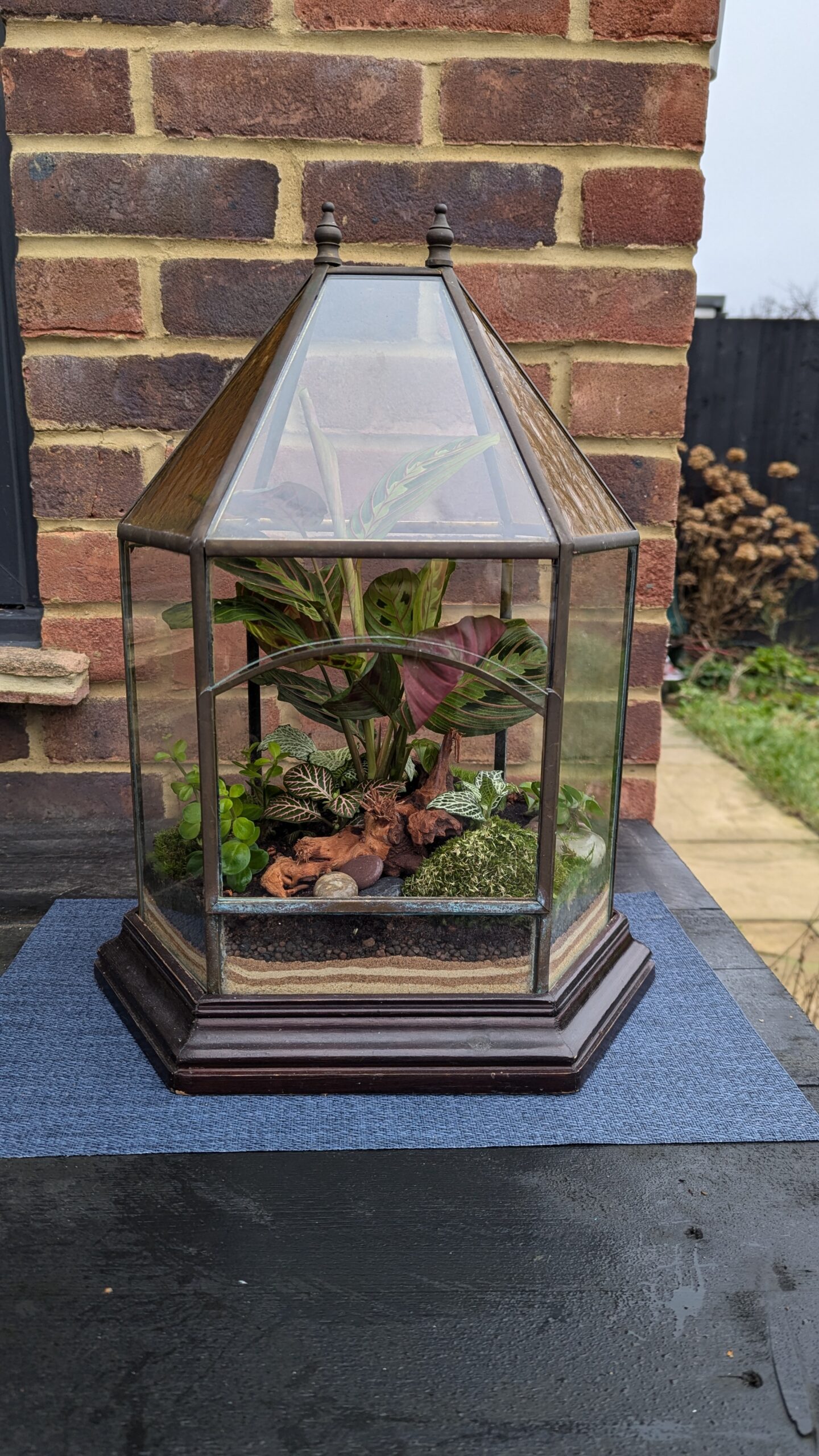
Every Blue Squid terrarium starts its life as something else. A vintage sweet jar from a charity shop in Weybridge. A demijohn that once held homemade wine. An old apothecary bottle found at a car boot sale. Before any plant goes in, the glass has already had a life, and I think that is what makes each upcycled glass terrarium special.
Using upcycled glass is not just an environmental choice (though it is a good one). It is a design choice, a quality choice, and a statement about the kind of objects I want to put into the world. Here is why I will always choose secondhand glass over new, and why I believe it makes genuinely better terrariums.
What Does “Upcycled Glass” Actually Mean?
Upcycling means taking something that has finished its original purpose and turning it into something of equal or greater value. It is different from recycling, which typically breaks materials down to create something new. When I upcycle a glass jar into a terrarium, the jar itself stays intact; it just gets a dramatically better second act.
The glass vessels I use for Blue Squid terrariums come from a variety of sources:
- Charity shops across Surrey and beyond
- Car boot sales and flea markets
- Local sellers and friends who know what I am looking for
- Online secondhand marketplaces
- Customers who donate their own interesting glass pieces
The Environmental Case for Upcycled Glass
The environmental argument is straightforward and compelling:
- Reduced manufacturing demand: Every upcycled vessel is one fewer new glass container that needs to be produced. Glass manufacturing requires high temperatures (around 1,700 degrees Celsius) and significant energy.
- Less waste to landfill: Glass takes roughly one million years to decompose in landfill. By giving these vessels a new purpose, they stay out of the waste stream entirely.
- Lower carbon footprint: No shipping from overseas factories, no industrial production line, no packaging for wholesale distribution. I source locally wherever possible.
- No new raw materials: Glass production requires silica sand, soda ash, and limestone. Using existing glass means none of those resources are consumed.
If you care about sustainability (and I know many of my customers do), choosing a terrarium made from upcycled glass is a genuinely meaningful choice, not a token gesture.
Why Upcycled Glass Looks Better
Here is what surprises people: upcycled glass often has better aesthetics than new, purpose-made terrarium containers. And there is a simple reason for that.
Mass-produced terrarium vessels tend to be perfectly uniform. Same shape, same size, same proportions as every other one on the shelf. They are fine, but they are also forgettable.
Vintage and secondhand glass has character. A slight imperfection in the curve. A beautiful patina on a brass clasp. An unusual shape that was designed for a completely different purpose. These are the details that make a terrarium feel like an object worth displaying, not just a plant in a jar.
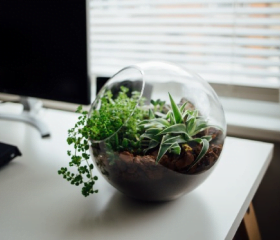
Some of the most popular terrariums I have made used vessels that were never intended for plants at all. A 1960s biscuit jar. A chemistry flask. A large perfume bottle. The unexpected container is part of what makes each terrarium a conversation piece.
Quality and Durability
There is a practical quality argument too. Many vintage glass pieces were manufactured to higher standards than their modern equivalents. Thicker glass, heavier bases, more robust construction. A well-made vintage jar that has survived decades is, by definition, durable. If it has lasted this long, it will last much longer as a terrarium.
I inspect every piece of glass I source. I check for:
- Chips or cracks that could affect how well the lid fits
- Structural weaknesses, especially around the neck or lid
- Glass thickness sufficient to handle the weight of substrate and plants
- A well-fitting lid (for closed terrariums, this keeps the water cycle working properly)
Anything that does not pass inspection does not become a terrarium. My standards are high because the glass is the foundation of the entire ecosystem.
Every Terrarium Tells a Story
I love the idea that every Blue Squid terrarium has a backstory. That sweet jar might have sat on someone’s kitchen counter for twenty years. That demijohn might have held elderflower wine someone’s grandmother made. The glass carries history, and now it carries a living, breathing miniature world.
When customers ask about the vessel their terrarium comes in, I can usually tell them exactly where I found it and what it was originally made for. That story becomes part of the terrarium’s identity, and I think that matters. It gives the object meaning beyond just being a nice thing to look at.
Sourcing Responsibly
I am deliberate about where and how I source my glass. I shop locally in Addlestone, Weybridge, and across Surrey as much as possible. I have relationships with several charity shops whose staff know to set aside interesting glass pieces for me. I attend local car boot sales regularly.
This approach keeps my supply chain short, supports local charity shops and sellers, and means I am not contributing to long-distance shipping emissions just to get a container.
See the Difference for Yourself
If you would like to see what an upcycled glass terrarium looks like in person, browse the Blue Squid shop. Every terrarium in the collection uses a unique, hand-sourced vessel, and I am always adding new pieces as I find them.
Based in Surrey or nearby? Local collection from Addlestone is available, and you are welcome to see the workshop. Explore the full terrarium range here.
Frequently Asked Questions
Is upcycled glass safe for plants?
Absolutely. Glass is inert, meaning it does not leach chemicals or affect the plants inside. I thoroughly clean and sterilise every vessel before building a terrarium in it, so the plants are in a perfectly safe environment regardless of the glass’s previous use.
Do closed terrariums need a good lid?
Yes, and I only use vessels for closed terrariums if the lid fits well. A good fit keeps humidity inside and lets the water cycle do its thing. Not every piece of glass I find is suitable for a closed terrarium; some become open terrariums or plant displays instead. You can still open the lid whenever you like for ventilation or watering.
Can I send you a glass vessel to make into a terrarium?
Yes, I love doing this. If you have a glass jar, bottle, or container with sentimental value, I can turn it into a terrarium for you (provided it passes my quality checks). It makes a wonderfully personal gift or a meaningful way to repurpose a family heirloom.
Where can I buy an upcycled glass terrarium in Surrey?
You can browse the full range in the Blue Squid Creation online shop. Collection is available from Addlestone, Surrey, and local delivery within 3 miles of KT15 is included free. Every terrarium uses a unique upcycled vessel, so no two are the same.
Related Posts
Benefits of Terrariums in Your Home or Office
Ben Brooks
January 24, 2024
Watering Your Closed Terrarium
Ben Brooks
January 24, 2024